How Can We Make Money From Facebook? A Complete Guide for Beginners
Facebook is no longer just a place where people share photos, chat with friends, or scroll through entertaining videos. It has become a powerful platform for creators, freelancers, entrepreneurs, small businesses, affiliate marketers, and online educators who want to turn an audience into an income stream. The important thing to understand is that Facebook itself is not a magic money machine. You do not simply create an account today and expect hundreds of dollars to appear tomorrow. Instead, Facebook works more like a busy marketplace: the platform gives you access to people, attention, communities, and potential customers, while you provide something valuable in return. That value could be entertaining videos, useful information, products, services, recommendations, education, or exclusive content. Once you understand that basic principle, making money from Facebook becomes much easier to approach. There are several different routes, including Facebook content monetization, Stars, subscriptions, affiliate marketing, sponsored posts, selling products, generating leads, offering services, and using Facebook Groups to build a loyal community. Some methods require a large audience, while others can work with a relatively small but highly targeted audience. The smartest strategy is usually to choose one primary income method, build consistent content around a specific topic, and gradually add additional revenue streams as your audience grows.
Why Facebook Can Be a Good Platform for Making Money
One of the biggest advantages of Facebook is that it combines content, community, communication, and commerce in one ecosystem. A person can discover your video, visit your profile or Page, join your Group, send you a message, click a product recommendation, and eventually become a customer without leaving the platform for every step. That makes Facebook particularly useful for people who are willing to build relationships rather than simply chase views. You do not necessarily need millions of followers to make money. A smaller audience can sometimes be more valuable when the audience has a strong interest in a particular subject and trusts your recommendations. Think about the difference between having 100,000 random followers and having 5,000 people who actively need the exact service or product you offer. The second group may generate more business because relevance and trust often matter more than follower count. Facebook also supports multiple content formats, including short videos, longer videos, photos, live broadcasts, Stories, Groups, and text-based posts, giving creators many ways to communicate with their audience. The key is to stop thinking only about “getting followers” and start thinking about building an audience that has a reason to listen to you.
Make Money Through Facebook Content Monetization
One of the most direct methods is Facebook’s own creator monetization ecosystem. Eligible creators may be able to earn money from advertising and other monetization features attached to their content. Meta’s Content Monetization Terms explain that eligible content can potentially earn a share of advertising revenue when Meta makes the relevant advertising tools available to the creator. However, access is not guaranteed, and creators must follow Meta’s applicable monetization and content policies.
This means your first priority should be creating original, engaging, policy-compliant content rather than trying to find shortcuts. A creator who produces useful tutorials, entertaining videos, educational explanations, cooking demonstrations, travel content, product reviews, or niche commentary can build an audience over time. The amount of money earned from content can vary significantly because monetization depends on factors such as eligible content, audience, advertising demand, engagement, and the monetization tools available to the account. There is no universal formula such as “one million views always equals a specific amount of money.” A better approach is to treat monetized content as one part of a larger business model. If your videos generate attention, you can potentially use that attention to create additional income through products, services, affiliate offers, sponsorships, or community memberships.
Earn Money From Facebook Stars
Facebook Stars provide another way for eligible creators to receive financial support from their viewers. Facebook explains that viewers can buy Stars and send them to participating creators on eligible content, including certain videos and live content. Creators must meet Facebook’s eligibility requirements, and Facebook reviews creators before Stars can be enabled.
Stars can be particularly interesting for creators who have an active community rather than simply a large passive audience. Imagine a creator who regularly goes live to answer questions about fitness, cooking, gaming, technology, business, or another specialist topic. If viewers find those sessions useful and want to support the creator, Stars can provide an additional revenue stream. The important lesson is that community engagement can have monetary value. Instead of constantly asking viewers to send Stars, focus on producing live sessions that people genuinely want to attend. Answer questions, demonstrate something useful, invite discussion, tell stories, and create recurring live events so your audience knows when to return. When viewers feel that they are part of a community rather than simply watching another random video, they may become more willing to support the creator.
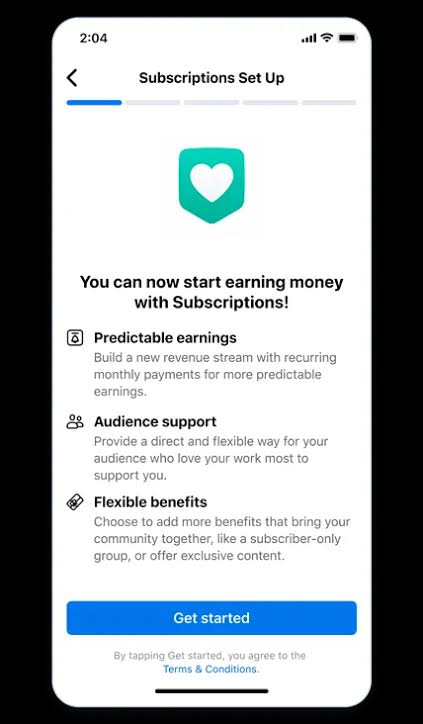
Earn Through Facebook Subscriptions
Subscriptions can turn your most loyal followers into recurring supporters. Facebook describes Subscriptions as a feature that allows people to pay a monthly fee to support participating creators in exchange for premium content and other benefits. Depending on the creator and availability, subscribers may receive exclusive content, badges, discounts, or other perks.
The biggest challenge with subscriptions is not creating a payment button; it is creating a reason for someone to keep paying every month. A successful subscription offer should answer a simple question: “What will I receive as a subscriber that I cannot get from your normal content?” You could provide private tutorials, exclusive livestreams, members-only discussions, behind-the-scenes content, downloadable resources, early access, special Q&A sessions, or personalized community interaction. The offer does not have to be complicated. In fact, simplicity can make it easier to maintain. If you charge a monthly fee, your goal should be to consistently deliver enough value that subscribers feel the membership is worthwhile. A small group of loyal paying followers can become a more predictable source of income than depending entirely on unpredictable advertising revenue.
Use Facebook to Promote Affiliate Products
Affiliate marketing is another powerful method because you do not necessarily need to create your own product. Instead, you recommend products or services offered by other businesses and potentially earn a commission when someone makes a qualifying purchase through your affiliate arrangement. Facebook can be used to educate an audience about products through videos, posts, comparisons, tutorials, reviews, and demonstrations.
For example, imagine you operate a Facebook Page about home cooking. Instead of posting random product links, you could create useful content around kitchen equipment. You might demonstrate how a particular blender works, compare two cooking tools, explain what beginners should look for when buying cookware, or show a practical recipe using a particular product. The affiliate recommendation becomes part of the useful content rather than an interruption. That distinction matters. People are generally more receptive to recommendations when they understand why the product solves a problem. Always follow the rules of the affiliate program and applicable advertising or disclosure requirements, and avoid making misleading claims about products. Long-term affiliate income is built on trust, so recommending something simply because it pays a high commission can damage the audience relationship that makes the business possible.
Sell Your Own Products on Facebook
Facebook can also help you sell physical or digital products. Physical products might include clothing, handmade goods, accessories, food products where legally permitted, artwork, home items, or other merchandise. Digital products could include ebooks, templates, guides, educational materials, design resources, photography presets, or other downloadable products.
The advantage of selling your own product is that you have greater control over the business model. Instead of earning a small commission from somebody else’s product, you can potentially keep a larger portion of the revenue after expenses. However, selling products successfully requires more than simply posting “Buy now” every day. Your Facebook content should explain the problem your product solves, demonstrate how it works, answer common questions, show real use cases, and help potential customers understand whether it is right for them. Product photography, clear descriptions, customer service, pricing, delivery information, and payment processes all matter. If people trust the Page but cannot understand how to purchase, the business loses opportunities. If they understand the product but do not trust the seller, they may still hesitate. Facebook therefore works best when content and commerce support each other.
Make Money by Selling Services
You do not need a product to make money from Facebook. Your skill can be the product.
If you can design websites, edit videos, write articles, create graphics, manage social media accounts, translate languages, teach a subject, provide photography, perform virtual assistance, or offer another useful service, Facebook can help you find customers. This method can work especially well for beginners because you may be able to start with skills you already possess.
A freelancer could create a professional Facebook Page showing examples of previous work. Instead of saying only “I am a graphic designer,” the person could post before-and-after designs, explain design decisions, demonstrate simple branding tips, and show completed projects. A video editor could publish short demonstrations showing how editing improves raw footage. A writer could publish useful articles demonstrating expertise. The objective is to turn your Facebook presence into a public portfolio. Potential customers want evidence that you can solve their problem. Helpful content provides that evidence while also giving people a reason to follow you.
Use Facebook Groups to Build a Profitable Community
Facebook Groups can be valuable because they allow people with a shared interest to gather in one place. A Group might focus on freelancing, cooking, travel, fitness, local business, education, technology, hobbies, parenting, photography, job opportunities, or countless other subjects.
A Group itself is not automatically a money-making machine. Its value comes from the community you build around a useful purpose. Once people trust the community, several legitimate business opportunities can develop. You might sell educational products, offer consulting, promote relevant services, arrange paid workshops, generate leads for a business, or create a premium membership outside or within available Facebook features. The crucial rule is to avoid turning the Group into a constant advertisement board. If every post is a sales pitch, members will eventually lose interest. A healthier model is to make the free community genuinely useful and introduce paid offers only when they naturally solve problems members have already expressed.
Make Money From Sponsored Posts and Brand Deals
As your audience grows, businesses may become interested in reaching your followers. This can create opportunities for sponsored content and brand partnerships. A company might pay you to demonstrate a product, publish a sponsored video, review an item, mention a service, or participate in a campaign.
You do not have to be a celebrity to attract sponsorships. Niche creators can be valuable because they often reach a very specific audience. A Facebook Page about gardening may be more relevant to a gardening-tool company than a general entertainment Page with a much larger following. A food creator could be attractive to kitchen brands, restaurants, cookware companies, or food businesses. A technology creator could appeal to software companies and electronics brands.
The most important factor is audience fit. If you normally create educational business content and suddenly promote a completely unrelated product, your followers may question your credibility. Choose partnerships that make sense for your niche, disclose sponsored relationships appropriately, and do not make claims you cannot support. Your reputation is an asset, and a short-term sponsorship should never destroy a long-term audience relationship.
Generate Leads for Local Businesses
Facebook can be especially useful for lead generation. Instead of trying to earn money directly from every post, you can use Facebook to bring potential customers to a business.
Consider a local service such as cleaning, landscaping, home repair, photography, tutoring, catering, or auto services. A Facebook Page can publish helpful local content, answer questions, showcase completed work, and encourage potential customers to send a message or request information. The business can then convert those inquiries into paying customers.
This model is powerful because a business may be willing to pay significantly more for a qualified customer than for a simple social media engagement. A person who messages asking for a quote is much more commercially valuable than someone who merely presses “Like.” If you can consistently generate genuine inquiries for a business, you have a skill that can be sold as a service. This is one reason Facebook marketing can be attractive to freelancers and small agencies.
Sell Facebook Management Services
Many business owners know they should use Facebook but do not have the time or skills to manage it consistently. This creates an opportunity for social media managers.
A Facebook manager might help with content planning, post creation, scheduling, community responses, basic analytics, video publishing, Page organization, and promotional campaigns. You can start by working with one small business and use the results as a case study for future clients.
The key is to sell an outcome rather than simply selling “posting.” A business owner does not necessarily care whether you publish three posts per week. They care about reaching potential customers, generating inquiries, building awareness, and supporting sales. When you understand the client’s business goals, your service becomes more valuable. Start with a manageable offer, document your work, collect testimonials when appropriate, and gradually increase your rates as your skills and results improve.
Create Educational Content and Sell Courses
If you know something that other people want to learn, Facebook can help you build an educational business. You might teach photography, cooking, language skills, software, marketing, fitness techniques, crafts, business skills, or another area where you have genuine expertise.
Start by giving away useful information. This may sound strange when the goal is to make money, but free educational content can demonstrate your ability. Someone who learns a useful technique from your free video may become interested in a deeper paid course later. Your free content acts like a sample of the quality people can expect.
A paid educational product should provide structure that free posts do not. Instead of random tips, you can provide a complete learning pathway, exercises, examples, resources, assignments, and support. The stronger the transformation you offer, the easier it becomes for potential customers to understand the value.
Use Facebook Live to Build Trust
Live video creates a different relationship between creator and audience because viewers can interact with you in real time. You can answer questions, demonstrate products, host interviews, conduct tutorials, discuss industry news, or simply communicate with your community.
Live streaming also gives you an opportunity to understand your audience better. Watch the questions people ask. Notice which subjects create discussion. Pay attention to recurring problems. These observations can become ideas for future content, products, services, or courses.
A successful live session does not have to look like a television production. Good lighting, understandable audio, a clear topic, and genuine interaction can be more important than expensive equipment. Think of a livestream as opening the door to your digital office or studio and inviting your audience inside.
Build a Facebook Content Strategy
Random posting can produce random results. A stronger approach is to create a simple content strategy. Choose a niche, define the audience, identify their problems, and develop several recurring content categories.
For example, a personal-finance Page might use four categories: educational tips, common mistakes, real-world examples, and questions from followers. A restaurant Page could use food demonstrations, customer experiences, menu education, behind-the-scenes content, and local information. A technology Page might focus on tutorials, comparisons, troubleshooting, product explanations, and industry developments.
The goal is consistency without becoming repetitive. Your audience should understand what your Page is about while still having a reason to return. Content creation becomes much easier when you have a framework instead of staring at an empty posting screen every morning.
Focus on Original Content
Originality matters greatly when building a long-term Facebook business. Meta’s Stars guidance specifically says eligible creator content must meet applicable standards and be original content created exclusively for Facebook in the relevant context. Meta’s monetization terms also require creators to have the necessary rights to content they monetize.
This is why copying viral videos from other creators is a weak strategy. You may get temporary attention, but you are building your business on content you do not control. Instead, use trends as inspiration while adding your own ideas, presentation, knowledge, commentary, or production. If you use music, images, clips, or other third-party material, make sure you have the rights or permission required for the intended use. A sustainable creator business should be built on an asset you actually own: your knowledge, creativity, brand, audience relationship, or product.
How Much Money Can You Make From Facebook?
There is no single answer because Facebook income depends on the monetization method, audience quality, content performance, niche, geography, advertiser demand, product margins, and your ability to convert attention into revenue. Someone with a small but targeted audience can potentially earn more from selling a high-value service than another creator with a much larger audience who relies only on advertising.
For example, a freelancer who finds two clients paying $500 each has generated $1,000 in revenue without needing a huge following. An affiliate marketer may need substantially more traffic because commissions per sale can be smaller. A creator selling a $50 digital product needs 20 sales to generate $1,000 in gross revenue, while a service provider charging $1,000 needs only one client to reach the same gross amount.
This is why it is dangerous to believe claims promising guaranteed Facebook earnings. Meta’s own monetization terms state that access to advertising tools is not guaranteed and that there are no guarantees about how much, or whether, a creator will receive payment.
A Simple Facebook Money-Making Plan for Beginners
The easiest way to get started is to avoid trying every method at once. Choose one niche that you understand and one audience you want to help. Then create a Facebook Page or professional creator presence that clearly communicates what people can expect from you.
For the first stage, concentrate on useful and original content. Publish consistently, experiment with different formats, respond to comments, and study which topics generate meaningful engagement. Once you begin attracting an audience, choose one monetization method that matches your situation. If you have strong expertise, services may be the fastest path. If you have a loyal community, subscriptions or Stars may become relevant. If you have product knowledge, affiliate marketing may work. If you have your own product, Facebook can become a valuable sales channel.
After you establish one working revenue stream, add a second. This creates diversification. Instead of relying entirely on Facebook advertising, you might combine content monetization with affiliate income and your own services. That way, if one source changes, the entire business does not disappear overnight.
Common Facebook Money-Making Mistakes to Avoid
Many beginners make the same mistakes because they focus on quick money instead of building something sustainable. One common error is buying followers or engagement. Artificial numbers do not necessarily create real customers, and deceptive or invalid activity can create serious problems for monetized content. Meta’s terms prohibit artificial or fraudulent methods of generating views, impressions, clicks, conversions, or other actions connected to monetized content.
Another mistake is posting only advertisements. People rarely follow a Page because they want to see endless sales pitches. They follow because the Page entertains, educates, inspires, informs, or helps them solve problems. A third mistake is copying other creators without adding meaningful original value. A fourth is changing niches every few days, making it difficult for the algorithm and audience to understand what the Page represents.
The final major mistake is expecting immediate income. Building an audience is more like planting a tree than turning on a light switch. You plant the idea, create content, nurture the audience, learn what works, and gradually develop revenue opportunities.
Facebook Monetization and Payout Considerations
Before expecting payments, creators should understand that monetization involves eligibility, onboarding, payment information, and compliance requirements. Meta’s terms state that creators must successfully complete the applicable payment enrollment process before receiving payments through the relevant advertising tools. Meta also explains that payout thresholds and payment timing can vary depending on the product and location.
This means you should not judge your Facebook business only by the number displayed in an analytics dashboard. Revenue needs to actually become payable and reach your selected payout method. Keep your account information accurate, follow applicable tax requirements, and review the current monetization settings available to your account because Facebook’s programs and eligibility requirements can change.
Can You Make Money From Facebook Without Showing Your Face?
Yes. You can build a Facebook business without becoming a traditional on-camera influencer. Faceless content can include screen recordings, narrated tutorials, animations, product demonstrations, cooking videos showing only hands, educational graphics, photography, written posts, interviews, and other formats.
However, “faceless” does not mean “effortless.” You still need something valuable to offer. A faceless Page that simply copies content from other websites is unlikely to build a durable business. A faceless educational Page that consistently explains complicated subjects clearly can become valuable because the audience follows the information rather than the creator’s face.
If privacy is important to you, choose a content format that allows you to maintain appropriate boundaries while still demonstrating expertise and originality.
The Best Facebook Income Strategy for 2026
A strong approach for 2026 is to think of Facebook as an audience-building engine rather than a single income source. Create original content that attracts a specific audience, then connect that audience with several legitimate ways to generate revenue.
For example, a food creator could publish recipes, earn from eligible Facebook monetization features, receive Stars during live cooking sessions, promote relevant kitchen products through affiliate partnerships, sell a recipe ebook, and eventually collaborate with food brands. One audience can therefore support several income streams.
A freelancer could create educational posts about graphic design, attract business owners, sell design services, promote useful software through legitimate affiliate programs, and eventually create templates or a course. The platform becomes the top of the business funnel rather than the entire business.
That distinction is important. Algorithms change. Features change. Monetization programs change. Your audience’s interests change. A creator who builds skills, trust, products, services, and relationships has more control than someone who depends entirely on a single Facebook payout program.
Conclusion
Making money from Facebook is possible, but the most reliable path is not chasing a secret trick or believing unrealistic income promises. The real opportunity comes from attention, trust, useful content, and a clear business model. Facebook can help you monetize content through eligible programs, receive Stars, build subscription communities, promote affiliate products, sell products, find service clients, generate leads, attract sponsorships, and develop an audience for an independent business.
Start small and focus on one topic. Create original content that genuinely helps or entertains a specific audience. Learn what your followers respond to, improve your content, and introduce a monetization method that naturally fits the audience you have built. Once one income stream starts working, diversify rather than depending entirely on one source.
The biggest question is not “How quickly can Facebook make me rich?” A better question is “What valuable thing can I build on Facebook that people will willingly pay for?” Once you answer that question, Facebook becomes much more than a social network—it can become a powerful part of your online business.
FAQs
1. Can beginners make money from Facebook?
Yes. Beginners can potentially earn through services, affiliate marketing, selling products, sponsorship opportunities, eligible creator monetization features, and other methods. The best option depends on the person’s skills, audience, location, and eligibility for Facebook’s available monetization programs.
2. Do I need millions of followers to make money on Facebook?
No. A smaller, targeted audience can be valuable. For example, a freelancer may only need a few customers to generate meaningful income, while a product seller may need fewer buyers than an advertising-based creator needs viewers.
3. Can I make money from Facebook without creating videos?
Yes. You can use written posts, images, Groups, product recommendations, service promotions, educational material, live audio or other available formats. However, the most suitable format depends on your audience and the monetization method you choose.
4. How long does it take to make money on Facebook?
There is no guaranteed timeline. Some people may find clients or customers quickly, while building a large creator audience can take much longer. Your niche, consistency, content quality, offer, audience demand, and ability to convert attention into sales all influence the timeline.
5. Is Facebook monetization guaranteed once I get many followers?
No. Followers alone do not guarantee access to monetization or a particular income level. Meta’s terms state that access to certain advertising tools can be restricted and that there are no guarantees regarding how much, or whether, a creator will receive payment.