3 Legit Ways to Earn Money from YouTube, TikTok, and Facebook
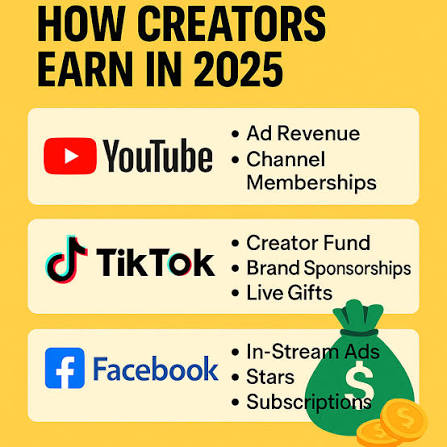
Making money from social media is no longer just a dream reserved for celebrities or people with millions of followers. YouTube, TikTok, and Facebook have created genuine opportunities for ordinary creators, freelancers, educators, reviewers, entertainers, and small business owners to turn useful content into income. The important word, however, is legit. There are plenty of exaggerated claims online suggesting that anyone can upload a few videos, get thousands of dollars overnight, or use copied clips to build a profitable account. Realistically, sustainable social-media income usually comes from building an audience, providing something valuable, and connecting that attention to a legitimate monetization method. The good news is that you do not necessarily need expensive cameras or a huge production team. A smartphone, a clear topic, consistent publishing, and patience can be enough to start. You can create tutorials, restaurant reviews, product demonstrations, educational videos, entertainment, commentary, storytelling, gaming content, or videos around a skill you already possess. Each platform works slightly differently, but the underlying business model is surprisingly similar: attention creates an opportunity, trust creates an audience, and an audience can create revenue. YouTube currently offers several monetization features through its Partner Program, while TikTok provides programs such as Creator Rewards and TikTok One, and Facebook provides monetization options for eligible creators.

1. Earn Money Through Platform Monetization
The first legitimate method is the most obvious one: let the platform pay you for eligible content and audience activity. This approach is attractive because you can build an income stream directly from the content you are already creating rather than immediately trying to sell your own product. YouTube is particularly well established in this area through the YouTube Partner Program (YPP). At the time of writing, YouTube says creators seeking full ad-revenue eligibility generally need 1,000 subscribers plus either 4,000 qualified public watch hours during the previous 12 months or 10 million qualified public Shorts views during the previous 90 days. YouTube also has an expanded level of YPP access for eligible creators, where 500 subscribers plus other activity and engagement requirements can unlock features such as fan funding and selected Shopping tools in supported regions. This means YouTube can become more than a place to upload videos; it can become a digital business property that continues attracting viewers after you publish. The key is understanding that monetization eligibility is not the same thing as guaranteed income. A channel can technically qualify and still make very little if its audience is small, its videos attract limited advertising demand, or viewers do not watch for long. Successful creators therefore treat monetization as one part of a broader strategy rather than the entire business.
How YouTube Monetization Works
YouTube provides several ways for eligible creators to earn, including advertising revenue, memberships, Super Thanks, Super Chat and other features depending on eligibility and location. The platform explains that creators accepted into YPP can choose monetization features available to them through YouTube Studio. Imagine your channel as a small digital television station. Every video is like a program, your subscribers are returning viewers, and advertisers are businesses willing to pay for access to audiences that may be interested in their products. The better your programming matches a specific audience, the easier it can become to attract consistent viewers. A cooking channel might focus on easy family meals, while a technology channel might specialize in budget smartphones, and a finance channel might focus on beginner money education. The biggest mistake beginners make is attempting to appeal to everybody. When you create videos for everyone, you often create videos that feel specifically useful to nobody. A narrower topic can actually make growth easier because viewers understand immediately why they should subscribe. You should also pay attention to thumbnails, titles, viewer retention, search intent, and the first few seconds of every video. These elements influence whether someone clicks, stays, and eventually returns.
TikTok Creator Rewards and Other Opportunities
TikTok has its own monetization ecosystem, but availability and eligibility can depend heavily on the creator’s country, account status, and the particular program. TikTok’s current Creator Rewards Program documentation says eligible creators need, among other requirements, at least 10,000 followers, at least 100,000 video views during the last 30 days, original eligible content, and videos that are at least one minute long. That immediately tells you something important: you should not build your entire financial plan around receiving TikTok payments from your first few videos. Instead, think of TikTok as a discovery engine. A short video can introduce you to people who have never heard of you, and those viewers can eventually become followers, customers, subscribers, or supporters. TikTok also lists additional creator opportunities such as TikTok One and Video Gifts, subject to their respective requirements and availability. The smartest approach is therefore to create content that can generate value even before direct platform rewards become available. If a video gets attention, ask yourself what legitimate business opportunity sits behind that attention. Perhaps viewers want a product you recommend, a service you provide, a longer tutorial on YouTube, or access to a digital product you created.
Facebook Content Monetization
Facebook should not be ignored simply because newer creators often focus more heavily on TikTok or YouTube. Meta currently provides creator monetization tools through Facebook, including Facebook Content Monetization, which can allow eligible creators to earn based on the performance of eligible content. Meta’s documentation indicates that eligible content can include formats such as public Reels, photos, stories, and text posts, although availability and requirements vary. Facebook also provides tools that allow creators to check monetization eligibility through Meta Business Suite or Professional Dashboard. This makes Facebook particularly interesting for creators who can produce content in multiple formats. A single idea could become a short Reel, a longer video, a photo post, a written explanation, and a discussion prompt. Instead of treating each piece as a completely separate project, you can build a content system where one idea produces several useful pieces of content. The objective is not to flood the platform with low-quality posts. The objective is to make one strong idea work harder for you.
2. Earn Money Through Affiliate Marketing and Brand Partnerships
The second legitimate method is affiliate marketing and brand partnerships, and this can be extremely powerful because you do not necessarily need platform monetization approval before you can begin. The basic concept is simple: you recommend a product, service, software tool, course, restaurant, travel experience, or other legitimate offer to an audience, and when someone purchases through your qualifying referral link, you receive a commission according to the affiliate program’s terms. Brand partnerships work slightly differently. A company may pay you to create content featuring its product or service, provided the arrangement complies with platform rules and applicable advertising-disclosure requirements. This method turns your social-media audience into a form of targeted marketing channel. Suppose you create videos about smartphones. Instead of relying exclusively on advertising revenue, you could make a video comparing two phones, explain their strengths and weaknesses, and provide properly disclosed affiliate links where appropriate. If a viewer decides to buy after watching your review, the sale can generate a commission. You are not being paid simply because somebody watched; you are being paid because your content helped influence a commercial decision. That distinction is important because it gives creators another path to income even when their audience is not enormous.
Choosing Products Your Audience Actually Needs
Affiliate marketing works best when there is a natural connection between your content and the products you recommend. If your account teaches photography, recommending camera accessories makes sense. If your channel covers home cooking, kitchen equipment may be relevant. If you create videos about freelancing, productivity software or educational resources may fit your audience. The dangerous approach is promoting random products simply because the commission appears attractive. Your audience is not a wallet with a face attached to it. People follow creators because they expect useful information, entertainment, inspiration, or a particular perspective. If every video suddenly becomes an aggressive sales pitch, trust can disappear faster than it was built. Think of trust like a glass of water: it takes time to fill, but one careless action can spill much of it. A creator who honestly explains both advantages and disadvantages of a product can appear much more credible than someone who claims that every product is “the best.” You should also read the terms of every affiliate program before promoting it, understand how commissions are calculated, check whether your country is supported, and clearly disclose qualifying commercial relationships where required. Never fabricate testimonials, invent discounts, or make claims you cannot support.
How Small Creators Can Approach Brands
You do not necessarily need millions of followers to work with brands. A smaller account with a focused audience can sometimes be more useful to a business than a huge account with an unrelated audience. Imagine two creators. One has 500,000 followers who are interested in general entertainment, while the other has 15,000 followers who specifically follow videos about professional baking equipment. If a company sells premium baking tools, the second creator may have a highly relevant audience. This is why niche and audience quality can matter as much as raw follower numbers. Start by creating a portfolio of your best content. Show brands what you can produce, who your audience is, what topics you cover, and what kind of results your content has generated when you have legitimate analytics available. Keep your pitch simple and professional. Explain what you can offer instead of sending a generic message asking whether a company “wants promotion.” You might offer a product demonstration, tutorial, review, comparison, short-form video package, or series of educational posts. Always make the commercial relationship clear to viewers when disclosure is required. A good partnership should feel like a useful recommendation rather than an advertisement disguised as an ordinary personal opinion.
Turning One Video Into Multiple Income Opportunities
One of the biggest advantages of social media is that the same original idea can support several legitimate revenue channels. Imagine you create a YouTube video titled “Five Affordable Tools Every Beginner Video Editor Needs.” From that one topic, you could create several short clips for TikTok, Facebook Reels, and YouTube Shorts. You could write a supporting article for your website, create a downloadable checklist, and include properly disclosed affiliate links to products discussed in the video. If a brand later notices that your audience is interested in editing tools, you may also become eligible for partnership opportunities. This is a much stronger strategy than producing unrelated content every day simply because an algorithm demands activity. Your goal should be to build a content ecosystem. You create one valuable idea, distribute it in appropriate formats, and connect it to multiple legitimate business opportunities. The important rule is that every platform should receive content that follows its own policies rather than blindly reposting material. Originality matters. TikTok’s Creator Rewards requirements, for example, emphasize original, high-quality eligible content, while YouTube and Facebook also have monetization policies that creators must follow.
3. Sell Your Own Products, Services, or Digital Skills
The third method is often the most powerful for creators who want to build a serious online business: use social media to sell something you own or provide. You do not have to wait for advertising revenue to become substantial. Instead, you can use YouTube, TikTok, and Facebook to attract potential customers for a service, physical product, digital product, consultation, membership, or educational resource. Think of your social-media account as the front window of a shop. People walk past because your videos catch their attention, but the actual business happens when interested visitors enter and discover what you offer. A graphic designer could post design tutorials and attract clients. A fitness educator could publish instructional videos and sell a legitimate training program. A photographer could post behind-the-scenes content and receive booking inquiries. A website developer could explain common website mistakes and offer development services. A language tutor could publish free lessons and sell personalized classes. The advantage is that your income is no longer tied entirely to the number of ads shown beside your content. One customer can potentially be worth more than thousands of passive views, depending on what you sell and the value it provides.
Freelance Services From Social Media
If you already have a useful skill, social media can become a powerful portfolio. You might offer video editing, graphic design, copywriting, translation, website development, social-media management, voice-over work, photography, consulting, or another legitimate service. Instead of simply announcing that you are available for work, demonstrate the skill publicly. A video editor could show how raw footage becomes a finished short. A graphic designer could explain why a particular logo works. A writer could demonstrate how to improve a weak headline. A web developer could show a website transformation. This type of content provides evidence rather than empty promises. Potential customers can see what you know before they contact you. You can then direct interested viewers to a professional contact method, portfolio, booking page, or marketplace profile. The process resembles planting seeds: most viewers will not become customers immediately, but consistent useful content increases the number of people who eventually discover that you can solve a problem for them. The best service-based creators do not spend every video shouting, “Buy from me.” They teach, demonstrate, answer questions, and allow their expertise to create demand naturally.
Digital Products Can Scale
Digital products provide another possibility because you can create something once and potentially sell it repeatedly. Examples include templates, guides, spreadsheets, design assets, educational resources, presets, printable materials, or original instructional courses. The product should solve a real problem rather than simply exist because you want something to sell. Before creating a large product, study the questions people repeatedly ask in your comments and messages. Those questions can reveal what your audience needs. If viewers constantly ask how you plan your content calendar, you might eventually create a useful content-planning template. If followers want help learning a software application, you might create an original beginner’s guide. If freelancers repeatedly ask how you organize client projects, you could develop a project-management template. Social media becomes the research laboratory and marketing channel, while the product becomes the solution. This is a more sustainable approach than copying another creator’s product or selling generic material that provides little value.
Which of the Three Methods Is Best?
There is no single answer because the best method depends on your audience, skills, niche, location, and goals. Platform monetization is attractive because the platform handles much of the advertising or creator-payment infrastructure, but eligibility requirements and earnings can vary. Affiliate marketing and sponsorships can work well when you have a trusted niche audience and products that genuinely fit that audience. Selling your own services or products gives you greater control over the business model, but it requires you to create something customers are actually willing to pay for. In practice, the strongest creators often combine all three rather than choosing only one. A YouTube channel might earn advertising revenue while also generating affiliate sales and client inquiries. A TikTok creator might use short videos to reach new people, then direct interested viewers toward a service or product. A Facebook creator might combine eligible content monetization with brand partnerships and community-based offers. The important thing is not to confuse multiple income streams with random monetization. Every revenue source should have a logical relationship with your content and audience. Your business becomes stronger when the pieces support one another instead of competing for attention.
How to Start With Almost No Budget
You do not need a studio filled with expensive equipment to begin. A smartphone, basic lighting, a quiet environment, and free or inexpensive editing software can be enough for your first stage. What matters more is the quality of your idea and presentation. Before recording, decide who the video is for, what problem it addresses, and what the viewer should know or do after watching. A simple structure can work: start with a strong reason to keep watching, deliver useful information, and finish with a natural next step. Avoid buying expensive equipment before you have demonstrated that you can consistently create content. Many beginners spend money on cameras, microphones, logos, and complicated websites before discovering that they do not enjoy making videos regularly. Start small and improve through repetition. Study which topics attract viewers, which videos retain attention, and which questions appear repeatedly in comments. Then create more content around what your audience actually responds to. Social media success is often less like winning a lottery and more like learning a sport. The first attempts may feel awkward, but every video gives you information that can make the next one better.
Mistakes That Can Stop You From Making Money
The easiest way to lose time on social media is to chase shortcuts. Buying followers, purchasing fake engagement, copying other people’s videos, stealing copyrighted material, using misleading thumbnails, and making unrealistic income promises can create serious problems. A large follower count is not useful if the audience is fake or uninterested. Platforms also maintain monetization and content policies, and meeting a numerical threshold does not automatically guarantee approval. YouTube explicitly states that channels are reviewed for compliance with monetization policies, while TikTok’s rewards system requires eligible original content and other criteria. Facebook similarly provides monetization eligibility and policy requirements that creators must meet. Another mistake is changing niches every few days. If you post restaurant reviews on Monday, cryptocurrency predictions on Tuesday, gaming clips on Wednesday, and random memes on Thursday, viewers may struggle to understand why they should follow you. You can experiment, but experimentation should still have a direction. Most importantly, never believe anyone promising guaranteed income. Legitimate social-media businesses can produce excellent results, but they require work, consistency, learning, and a willingness to adapt.
A Practical Strategy for YouTube, TikTok, and Facebook
A simple cross-platform strategy can make your workload more manageable. Choose one core topic and build your main piece of content around it. You might create a detailed YouTube video, then extract several genuinely useful short clips from that original work for TikTok, Facebook Reels, and YouTube Shorts. You can also transform the central idea into a written Facebook post or another educational format. The important word is transform, not simply copy. Different platforms have different audiences, formats, policies, and recommendation systems, so adjust the presentation instead of treating every platform as identical. Your YouTube video might be ten minutes long and deeply explanatory, while your TikTok clip might answer one specific question in under a minute or, where relevant to TikTok’s Creator Rewards requirements, use a longer original format. Facebook might allow the same subject to become a Reel plus a discussion-focused post. Over time, your analytics will tell you which subjects deserve more attention. If one topic repeatedly generates views, comments, saves, shares, clicks, or sales, create variations around that theme. You are not trying to guess the algorithm perfectly; you are collecting evidence about what your audience values.
Can You Make $100 a Day From Social Media?
Yes, it is possible for some creators and businesses to reach $100 per day, but it is not guaranteed and it usually does not happen immediately. The important question is not simply, “How many views do I need?” because income depends on the monetization method. A creator selling a $100 service may need only one customer to generate $100 in revenue, while a creator depending solely on advertising may require a much larger amount of qualified traffic. An affiliate marketer might earn several smaller commissions that add up over time. A content creator could combine platform payments, affiliate revenue, sponsorships, and service sales. This is why you should avoid calculating your entire business around viral views. A viral video can bring millions of impressions without producing meaningful income if the audience has no connection to your offer. On the other hand, a smaller video answering a highly specific buying question can produce valuable customers. Reach is useful, but relevance is powerful. Build an audience around a problem, interest, or identity, then create legitimate ways for that audience to support your work. Your target should be a sustainable system rather than a single lucky viral moment.
Building Trust Is the Real Long-Term Strategy
If you want to earn money from YouTube, TikTok, or Facebook for years rather than weeks, focus on trust. People are becoming increasingly skilled at recognizing low-effort content, fake recommendations, exaggerated claims, and recycled material. When viewers believe that you respect their time and genuinely want to help them, they are more likely to watch another video, follow your account, click a recommendation, purchase a product, or contact you about a service. Trust also gives you flexibility. Your first income stream might be affiliate marketing, your second might be sponsorships, and your third might eventually become your own product. If the audience trusts you, changing the business model does not necessarily mean starting from zero. You carry the relationship with you. That is why every piece of content should pass a simple test: Would I still be comfortable publishing this if there were no immediate money attached to it? If the answer is yes because the content is genuinely useful, entertaining, or informative, you are probably building something healthier. Social media algorithms change, monetization programs change, and trends disappear, but a loyal audience can remain valuable.
Conclusion
The three most legitimate ways to earn money from YouTube, TikTok, and Facebook are platform monetization, affiliate marketing and brand partnerships, and selling your own products or services. None of these methods should be treated as an instant-money machine. YouTube currently offers multiple monetization features through YPP, with specific eligibility requirements for advertising and other features, while TikTok’s Creator Rewards Program has its own eligibility rules and emphasizes original eligible content. Facebook also provides creator monetization tools, including Content Monetization, with availability and eligibility depending on the account, content, location, and applicable policies. The smartest beginner strategy is to choose one clear niche, publish useful original content consistently, study audience response, and gradually add monetization methods that naturally fit what your followers need. You do not need to become famous before you start building a business. You need to become useful to a specific group of people. Start with the equipment you already have, avoid fake engagement and unrealistic promises, learn the rules of every platform you use, and think of every video as an opportunity to build trust rather than simply collect views. If you approach social media like a real business instead of a shortcut to instant cash, YouTube, TikTok, and Facebook can become powerful tools for creating multiple legitimate income streams over time.
FAQs
1. Can beginners really make money from YouTube, TikTok, and Facebook?
Yes, beginners can eventually earn money, but income is not guaranteed and usually requires consistent content, audience growth, and a suitable monetization strategy. You do not necessarily need millions of followers because services, affiliate marketing, and niche sponsorships can sometimes work with smaller but highly relevant audiences. Platform-based monetization has its own eligibility requirements, so beginners should build their audience while working toward those requirements. YouTube, TikTok, and Facebook each have different policies and programs, which means creators should check their official monetization dashboards and current requirements rather than relying on outdated social-media advice.
2. Which platform is best for making money?
There is no universally best platform. YouTube can be particularly attractive for long-form educational content and multiple monetization features, while TikTok can be powerful for discovery and short-form audience growth. Facebook can be useful for creators who want to combine Reels, videos, photos, stories, text content, communities, and other formats. Your niche should influence your choice. A tutorial creator might prefer YouTube as the central platform, while a trend-focused creator might prioritize TikTok, and a community-focused creator might find Facebook especially useful.
3. Do I need 10,000 followers before I can earn money?
No. There is no universal 10,000-follower rule for every type of social-media income. For example, TikTok’s current Creator Rewards Program documentation includes a 10,000-follower requirement among its eligibility criteria, but other monetization methods and platforms have different requirements. You could potentially earn through services, affiliate relationships, or other legitimate commercial opportunities before reaching that number, provided you follow the applicable platform rules and disclose commercial relationships appropriately.
4. Can I repost other people’s videos to make money?
Reposting other people’s content without the necessary rights or without adding sufficient original value is a poor long-term strategy. Copyright issues can affect your account, and platforms may also restrict monetization for content that does not meet their originality or monetization requirements. TikTok’s Creator Rewards Program specifically emphasizes original, high-quality eligible content, while YouTube also reviews channels for monetization-policy compliance. Creating your own commentary, education, demonstrations, reviews, storytelling, or other genuinely original material is a much safer foundation.
5. What should I do first if I have zero followers?
Choose one niche and one clear audience first. Then create a small batch of useful videos around questions, problems, or interests that audience already has. Do not obsess over making the first video perfect. Focus on improving the hook, clarity, audio, editing, thumbnail or cover, and overall usefulness with every upload. Once you begin receiving real audience data, use it to decide what to make next. The objective is to build a repeatable content system rather than hoping one random video becomes viral.