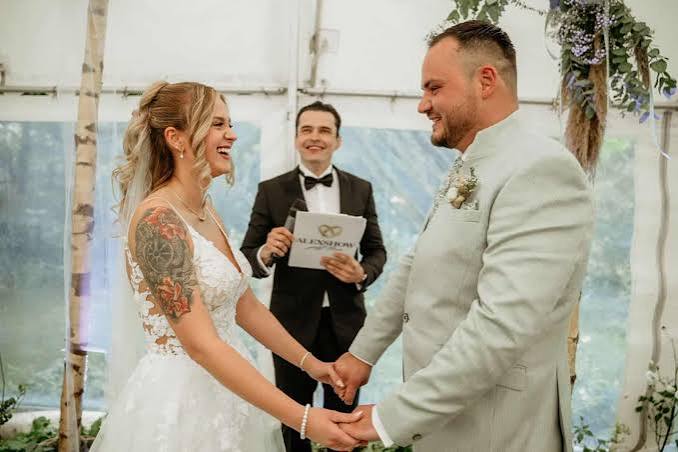
How to Get Married in the USA as a Foreigner: A Complete Guide
Getting married in the United States as a foreigner is possible, but the process involves two separate issues: getting legally married and dealing with immigration status. Marriage itself is generally governed by the state where the wedding takes place, while immigration matters are handled under federal law.
If you are a foreign national planning to marry a U.S. citizen or another foreign national in the United States, it is important to understand the marriage-license requirements, visa rules, required documents, and what happens after the wedding.
This 2026 guide explains the process in simple steps.

Table of Contents
- Can a Foreigner Get Married in the USA?
- Marriage License Requirements
- Documents You May Need
- Choosing the State
- Getting a Marriage License
- Having the Wedding Ceremony
- Getting Your Marriage Certificate
- If You Are Marrying a U.S. Citizen
- K-1 Fiancé Visa
- If You Are Already in the USA
- Applying for a Green Card
- Important Mistakes to Avoid
- Final Checklist
- Disclaimer
Can a Foreigner Get Married in the USA?
Yes. A foreign national can generally marry in the United States if the couple meets the legal requirements of the state where the marriage takes place.
The exact rules are different from state to state. You normally apply for a marriage license through the appropriate local government office, such as a county clerk or vital records office. A marriage license gives you legal permission to marry, while a marriage certificate is evidence that the marriage actually took place.
You do not automatically become a U.S. citizen or receive a Green Card simply because you marry someone in America.
Marriage and immigration are separate legal processes.
1. Choose the State Where You Want to Marry
The first step is deciding where you want to have the wedding.
Marriage laws are primarily controlled by the state and local jurisdiction. Requirements can therefore vary considerably.
Before making travel arrangements, check the official government website for the county or city where you plan to marry.
Look for information about:

- Marriage-license application procedures
- Identification requirements
- Minimum age
- Waiting periods
- Marriage-license fees
- Whether appointments are required
- Whether witnesses are required
- How long the license remains valid
- Who can perform the ceremony
Some jurisdictions may allow applications online, while others require both people to appear in person.
2. Prepare Your Documents
A foreign national may be asked to provide identification and documents demonstrating that they are legally able to marry.
Commonly requested documents can include:
- Valid passport
- Birth certificate
- Visa or immigration documents, where applicable
- Divorce decree if previously married
- Death certificate of a former spouse, where applicable
- Other identification documents
- Certified translations of foreign-language documents, if required
The exact list depends on the state and county.
If you were previously married, make sure the previous marriage has been legally terminated. USCIS likewise requires evidence that previous marriages have ended when relevant to immigration petitions.
Do not assume that every county has the same requirements.
3. Apply for a Marriage License
After checking the local requirements, submit your marriage-license application.
A marriage license is different from a marriage certificate.
Marriage license: Permission to legally marry.
Marriage certificate: Official evidence that the marriage occurred.
USA.gov explains that marriage-license procedures depend on the location where you are getting married, and licenses may expire if the wedding does not occur within the applicable period.
Before applying, check:
- Where the license office is located.
- Whether you need an appointment.
- What identification is accepted.
- Whether both partners must appear.
- How much the license costs.
- Whether there is a waiting period.
- How long the license is valid.
4. Have the Marriage Ceremony
Once you have the marriage license and satisfy any waiting-period requirements, you can have the legal ceremony.
The ceremony must generally be performed by someone legally authorized under the relevant state or local law.
Depending on the jurisdiction, this could include an authorized officiant, judge, religious official, or another person permitted by state law.
After the ceremony, the required parties sign the marriage paperwork and it is returned to the appropriate government office according to local rules.
5. Obtain Your Marriage Certificate
After your marriage has been properly recorded, request certified copies of your marriage certificate.
This document can be extremely important, especially if you later need to prove your marriage for immigration, insurance, taxes, name changes, or other legal purposes.

USA.gov recommends contacting the vital records office in the state where you were married to learn how to obtain certified copies.
It is sensible to obtain several certified copies if you expect to use the marriage record for multiple official purposes.
6. What If You Are Marrying a U.S. Citizen?
This is where marriage and immigration become especially important.
If your spouse is a U.S. citizen, you may potentially qualify for an immigration benefit based on the marriage. However, marriage does not automatically give you lawful permanent residence.
The appropriate immigration procedure depends on your circumstances, including where you are currently located, your current immigration status, and how you entered the United States.
For example, a U.S. citizen may generally petition for a foreign spouse using Form I-130, Petition for Alien Relative. If the foreign spouse is outside the United States, consular processing may be involved. If the foreign spouse is already in the United States and eligible, adjustment of status may be possible.
Because immigration situations can be complicated, professional immigration advice may be worthwhile.
7. The K-1 Fiancé Visa Option
If you are outside the United States and engaged to a U.S. citizen, another option may be the K-1 fiancé(e) visa.
The K-1 process is specifically designed for certain foreign fiancés of U.S. citizens who intend to marry in the United States.
Generally, the U.S. citizen fiancé(e) begins the process by filing a petition with USCIS. After the petition and visa process are completed, the foreign fiancé(e) may travel to the United States with a K-1 visa.
The couple must generally marry within 90 days after the foreign fiancé(e)’s admission to the United States. After the marriage, the foreign spouse may apply for adjustment of status to seek permanent residence.
The K-1 visa is therefore different from simply traveling to America and getting married.
8. Can You Enter the USA as a Visitor and Get Married?
This is an area where foreigners should be particularly careful.
Getting married in the United States and intending to remain permanently in the country are not necessarily the same thing.
If someone enters the United States using a temporary visitor status while already planning to immigrate permanently, there can be serious immigration consequences depending on the circumstances.
Your actual intentions and immigration history matter.
Therefore, do not use a visa simply because you believe marriage will automatically allow you to stay in America.
If your genuine plan is to immigrate to the United States through a U.S. citizen fiancé or spouse, investigate the appropriate immigration route before traveling.

9. If You Are Already in the United States
If you are already legally present in the United States, your options can depend heavily on your current immigration status and circumstances.
For example, someone in the United States on a particular nonimmigrant status may marry a U.S. citizen and potentially qualify for adjustment of status, while another person’s situation may be more complicated.
USCIS considers factors such as eligibility, immigration history, previous marriages, admissibility, and the circumstances surrounding entry and status.
Consequently, two foreigners who both marry U.S. citizens can have very different immigration outcomes.
10. Applying for a Green Card After Marriage
Marriage to a U.S. citizen can provide a potential family-based immigration pathway, but there is an application process.
Depending on the circumstances, the U.S. citizen spouse may file Form I-130, while an eligible spouse already in the United States may also apply for adjustment of status using Form I-485.
USAGov explains that the process differs depending on whether the foreign family member is inside or outside the United States.
Applicants may need to provide evidence such as:
- Marriage certificate
- Identity documents
- Evidence of the U.S. citizen’s status
- Evidence that previous marriages ended
- Passport photographs
- Immigration records
- Financial-support documentation
- Evidence that the marriage is genuine
USCIS may also conduct background checks and, in some cases, interview the couple.
11. Proving a Genuine Marriage
For immigration purposes, a marriage should be genuine rather than entered into primarily to obtain an immigration benefit.
Couples may need to provide evidence demonstrating their relationship and shared life.
Examples can include:
- Photos together
- Travel records
- Communication records
- Joint financial accounts
- Joint lease or housing documents
- Insurance records
- Wedding photographs
- Correspondence
- Evidence of visits to one another
The exact evidence required varies by case.
Never create fake documents or provide false information to immigration authorities.
Marriage fraud can result in extremely serious immigration and legal consequences.
12. What Happens After Permanent Residence?
If your marriage-based immigration application is approved, you may receive lawful permanent resident status under the applicable rules.
In certain situations, if permanent residence is granted when the marriage is less than two years old, the foreign spouse may receive conditional permanent resident status for two years. USCIS describes this as a two-year conditional status in qualifying circumstances.
Permanent residence is not the same as U.S. citizenship.
A Green Card holder must separately qualify for naturalization if they later want to become a U.S. citizen. USA.gov notes that some people married to U.S. citizens may qualify for naturalization after three years as lawful permanent residents if they meet the applicable requirements.
13. Common Mistakes to Avoid
Foreigners planning to marry in the United States should avoid several common mistakes.
Assuming marriage automatically provides a Green Card
It does not. Immigration benefits require a separate legal process.
Ignoring state marriage laws
The marriage requirements can vary by state and county.
Using incorrect documents
Make sure foreign documents are valid and translated or certified when required.
Overstaying a visa
Getting married does not automatically erase an immigration violation.
Providing false information
Never lie to immigration officers, visa officials, or USCIS.
Waiting until the last minute
Marriage licenses, immigration applications, document translations, and government appointments can take time.
14. Simple Checklist for Foreigners
Before getting married in the USA, consider this checklist:
Before traveling:
- Determine the correct immigration/visa situation.
- Select the state and county.
- Check marriage-license requirements.
- Prepare your passport and other documents.
- Arrange certified translations if necessary.
Before the ceremony:
- Apply for the marriage license.
- Complete any required waiting period.
- Confirm your officiant.
- Prepare witnesses if required.
After the ceremony:
- Make sure the marriage is properly recorded.
- Obtain certified marriage certificates.
- Keep copies of all important documents.
- If immigrating, determine whether you need I-130, I-485, consular processing, or another immigration procedure.
Conclusion
Getting married in the United States as a foreigner is possible, but you should treat marriage law and immigration law as two different processes.
First, determine the requirements of the state where you want to marry and obtain the appropriate marriage license. After the ceremony, obtain your official marriage certificate. If your spouse is a U.S. citizen and you want to live permanently in America, investigate the appropriate immigration pathway, such as a family-based petition or, for eligible couples planning to marry in the United States, the K-1 fiancé(e) visa.
The best approach is to check the requirements of the specific state and county and use official government information for immigration procedures.
Disclaimer
This article is for general informational and educational purposes only and does not constitute legal or immigration advice. Marriage and immigration requirements can change and vary according to individual circumstances, state law, visa category, and immigration history. Before making important decisions, check current information from official U.S. government sources such as USCIS and USA.gov or consult a qualified U.S. immigration attorney.